Parrot Tulips: The Wild Ones of the Field
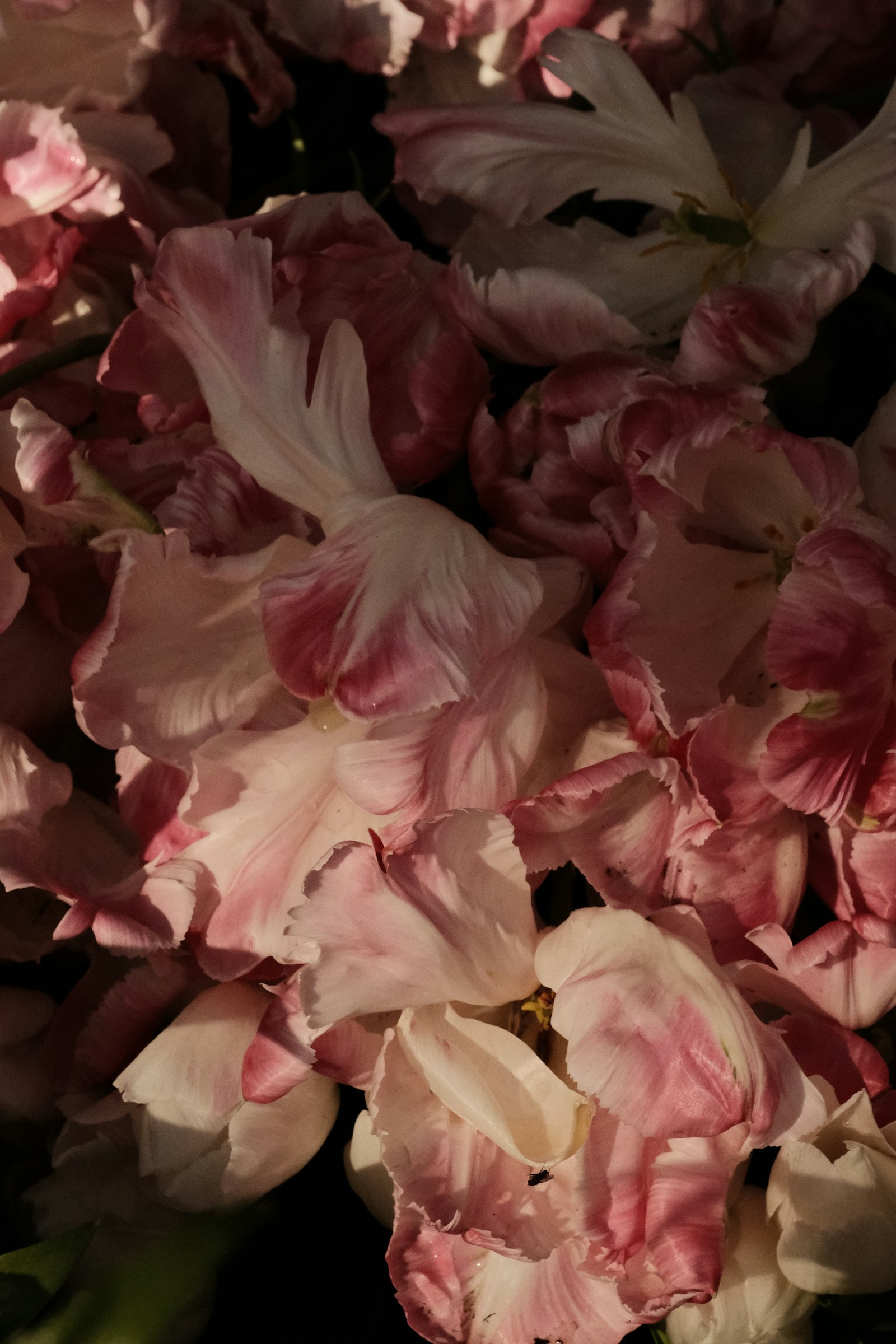
If a regular tulip is the well-behaved cousin who shows up to dinner in a clean shirt, the parrot tulip is the one who arrives in a velvet jacket with paint on the cuffs. Ruffled, twisted, streaked with color, sometimes shaped like nothing recognizable until it opens — parrot tulips are the most theatrical flower we grow.
They are also one of the most-asked-about flowers in our field. People walking past the parrot beds usually stop and ask what they are looking at. The answer is almost always the same: yes, that’s a tulip. Yes, it really grew like that. No, we did not paint it.
What Makes a Parrot Tulip a Parrot Tulip
The defining feature of a parrot tulip is the petal itself. Instead of the smooth, cup-shaped petals of a single tulip, parrot petals are ruffled, fringed, twisted, and often deeply cut along the edges. The texture is somewhere between crepe paper and a feather, which is where the name comes from — the petals look like the splayed wing feathers of a tropical bird.
Most parrot tulips also feature dramatic color streaking. A single bloom might combine three or four colors in a pattern that no two flowers share. Pink fades into chartreuse fades into deep red. Cream is veined with apricot. Black blooms catch the light and reveal flickers of bronze underneath. The streaking is partly genetic and partly a quirk of how the petals develop — meaning every parrot tulip is, in a real sense, one of a kind.
The form opens slowly and changes shape across its vase life. A parrot tulip on day one looks like a tightly wrapped artichoke. By day three it is a wide-open extravagance, petals splayed and curling backward. By day six it is something close to a peony in scale. Watching one open across a week is one of the small pleasures of growing them.
A Brief History
Parrot tulips first appeared in 17th-century Holland, originally as accidental mutations of standard tulip cultivars. Dutch growers, recognizing something special, began stabilizing the trait through selective breeding. They were prized during the height of Dutch tulip mania — some of the most expensive tulip bulbs ever sold were parrot or parrot-like varieties, with their wild streaking and unpredictable form.
Modern parrot tulips are far more reliable than their 17th-century ancestors, but they still carry that same hint of unpredictability. We plant the same bulbs in the same beds two years in a row and the blooms still surprise us.
Varieties We Grow
A few of the parrot varieties currently in our beds:
Estella Rijnveld
The most photographed parrot tulip in the world, and for good reason. Bright candy-cane red and white, with deeply fringed petals that look like crepe paper. A reliable garden performer and a showstopper in arrangements. If you have ever seen a tulip and thought it could not possibly be real, it was probably this one.
Black Parrot
Deep, almost black-purple petals with a faint bronze sheen in the right light. The drama in this variety is the contrast — pair Black Parrot with creams and whites and the bouquet looks like a 17th-century Dutch painting. On its own, in a clear glass vase, it is the closest a tulip gets to looking gothic.
Rococo
Cherry red with green edges and gold flecks — baroque in the best sense. Heavy heads on shorter stems, so it works best in a wide-mouthed vase or as part of a low arrangement. The colors are saturated enough that one or two stems will anchor an entire bouquet.
Flaming Parrot
Bright yellow streaked with bold red flames running up each petal. Cheerful, loud, completely unsubtle — the parrot tulip equivalent of someone telling a great story at full volume. Works well in mixed bouquets when you want a clear focal point.
How to Arrange and Care For Them
Parrot tulips have a few quirks worth knowing about if you want them to look their best.
Heavy heads, dramatic curves. The blooms are large and the stems are sometimes a touch shorter than standard tulips. As they open and the heads get heavier, the stems will bend toward the light, which is part of the charm but means a tall narrow vase will tip over. A wide-mouthed vase that lets the stems splay outward shows them off best.
They keep growing in the vase. Like all tulips, parrots continue to grow after they are cut — sometimes adding two or three inches of stem length over their first few days in water. Trim the stems on day three or four if you want to keep them in proportion to your vase.
Cool water, no warm spots. Parrot tulips open faster in heat. If you want to slow the show down and stretch out the bloom phase, keep them in cool water and away from direct sun or heating vents. If you want them to open quickly for an event, do the opposite — warm room, fresh water, watch them unfold within hours.
Pair them sparingly. Because each parrot tulip is so visually loud, you do not need many of them in an arrangement. Three to five parrot stems mixed with a dozen single tulips will read as a lush, dramatic bouquet. Twenty parrot stems together can look chaotic. Restraint is the trick.
When to Order
Parrot tulips bloom mid- to late-season in our field, typically late April through mid-May. The window is short, four to six weeks at most, and supply is always limited compared to standard tulips. If you want them, order early.
Our garden-mix bunches will include parrot stems whenever they are at peak in the field. If you want a bunch heavy on parrots specifically, leave a note at checkout and we will do our best.
Want a tulip bunch with extra drama? Add a note at checkout requesting parrot tulips and we will pull from the field accordingly. Bunches start at $40 for 25 stems.
Shop Tulip BunchesThe Appeal
What makes parrot tulips worth the extra effort — the heavier heads, the shorter window, the slightly higher cost — is that they reset what people think a tulip can be. Most folks have a mental image of a tulip as a tidy, rounded cup. Parrot tulips show up looking like a different flower entirely, and that surprise is half the pleasure.
If you have never had them in your home before, this is the season. The field is full of them right now, and they are at their most theatrical first thing in the morning, just after we cut.