What Regenerative Farming Means for Your Flowers
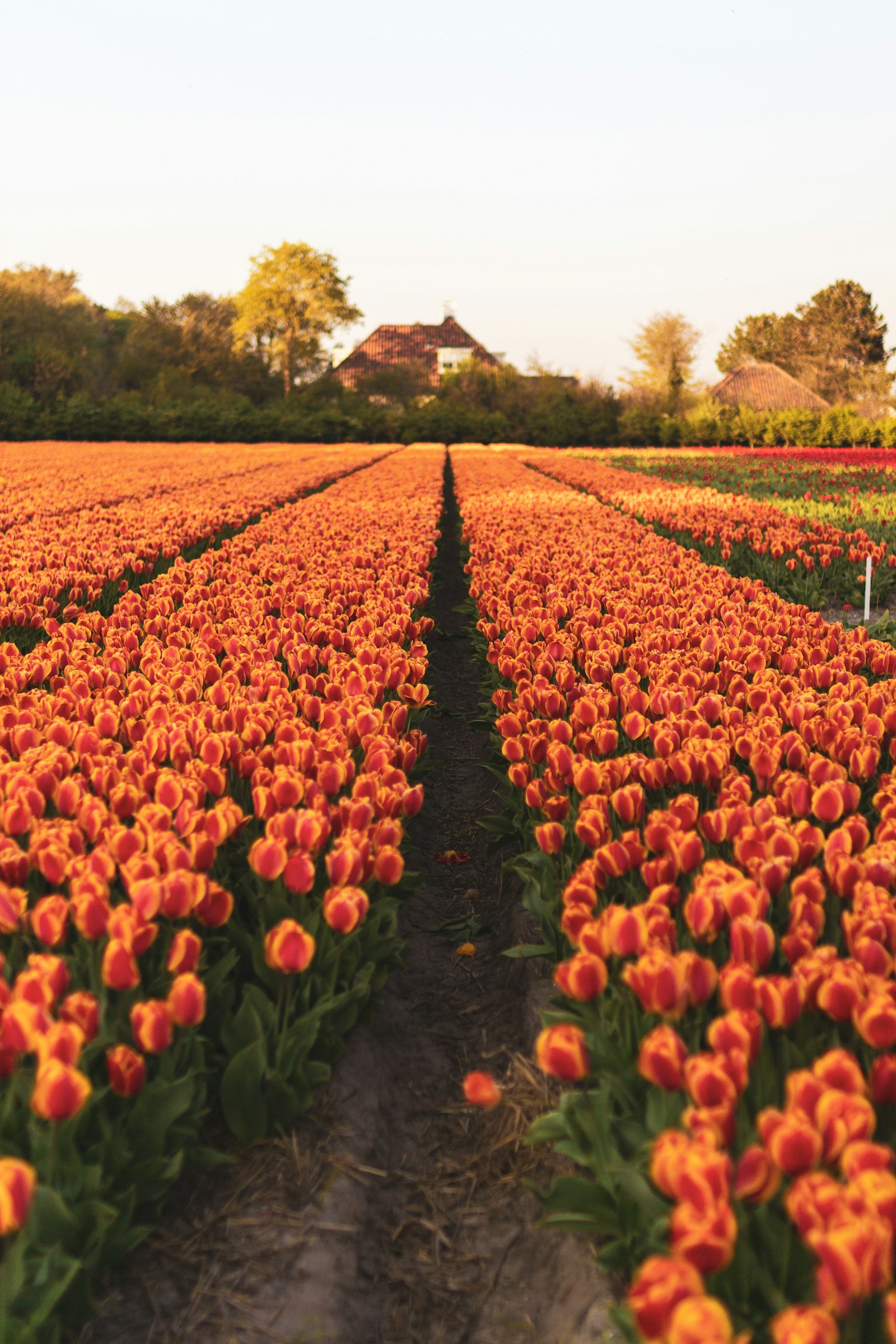
Regenerative farming has become a bit of a buzzword. You see it on coffee bags, in grocery store marketing, on labels for everything from beef to bed sheets. And like most buzzwords, the more it gets used, the less it seems to mean. So we want to be straightforward about what it means here, on our farm, for the flowers that end up on your kitchen table.
For us, regenerative is not a certification or a marketing angle. It is just how we farm. It describes a set of practices we follow because they produce healthier soil, stronger plants, and better flowers. It also happens to leave our land in better shape each year than the year before. That is the whole idea: farming that gives back more than it takes.
What Regenerative Farming Actually Is
In the simplest terms, regenerative agriculture is farming that improves the land rather than depleting it. Conventional agriculture tends to work against nature. It strips the soil of nutrients through intensive planting, replaces those nutrients with synthetic fertilizers, and controls pests and weeds with chemical pesticides and herbicides. The soil becomes a medium for holding plants upright rather than a living ecosystem that feeds them. Over time, the soil loses its structure, its microbial life, and its ability to hold water. It becomes dependent on external inputs just to function.
Regenerative farming takes the opposite approach. Instead of replacing what the soil loses, the goal is to build soil health so that the land can sustain itself. Healthy soil is alive. A single teaspoon of good farm soil contains billions of microorganisms, fungi, and bacteria that break down organic matter into nutrients plants can absorb. When that biology is thriving, the soil holds more water, resists erosion, sequesters carbon, and grows plants with deeper roots and stronger cell walls. The farm becomes more productive over time, not less.
This is not a new idea. Farmers have understood soil health for centuries. What is new is the urgency. Decades of industrial agriculture have degraded topsoil across the country, and small farms that prioritize soil health are part of the solution.
How We Practice It: Three Core Methods
No Synthetic Chemicals
We never use synthetic pesticides, herbicides, or chemical fertilizers on any of our flowers. Not on the tulips, not on the peonies, not on anything we grow. This is a firm line for us, not a seasonal decision or a variety-by-variety choice.
Instead of reaching for a spray bottle when we see aphids, we rely on integrated pest management. That means we encourage populations of beneficial insects, ladybugs and lacewings and parasitic wasps, that naturally keep pest populations in check. We monitor our fields closely and intervene early with targeted, non-chemical methods when we need to. We also use companion planting, growing certain plants alongside our flowers that naturally repel common pests or attract the beneficial insects we want.
It takes more attention than simply spraying on a schedule. But it works. And the result is flowers that have never been touched by synthetic chemicals, which matters both for the health of our soil and for the bouquet sitting on your dining room table.
Cover Cropping
Between tulip seasons, our fields are not left bare. Bare soil is vulnerable soil. It erodes in the rain, bakes in the sun, and loses the microbial life that makes it fertile. So when our tulip beds are resting, we plant cover crops, primarily clover and rye.
These cover crops do several things at once. Clover is a legume, which means it fixes nitrogen from the atmosphere and deposits it into the soil through its root system. That is free, natural fertilizer produced by the plant itself. Rye, meanwhile, grows a dense root structure that holds soil in place, prevents erosion, and breaks up compacted layers so water can infiltrate more easily. Both crops feed the soil biology, providing organic matter that earthworms, fungi, and bacteria convert into the nutrients our flowers will use the following season.
When it is time to plant tulips again, we incorporate the cover crop residue back into the soil. It is a cycle: the cover crops feed the soil, the soil feeds the flowers, and the flowers feed everything we do. Nothing is wasted.
Composting
We compost on-farm, turning plant material, spent stems, and organic waste into rich, dark compost that goes right back into our beds. Composting is the simplest form of regeneration. You take what the farm produces, let biology break it down, and return it to the soil as concentrated organic matter.
Good compost improves soil structure, increases water retention, and introduces a diverse community of beneficial microorganisms. It is the foundation of everything else we do. When your soil is rich in organic matter, your plants grow deeper roots, develop stronger stems, and produce more vibrant blooms. There is no synthetic fertilizer that can replicate what healthy, living compost does for soil biology.
No-Till for Peonies
Peonies are perennials. A well-planted peony can live and bloom for 50 years or more. Our peony plants are not replanted each season. They are established, long-term residents of our farm, and we treat their soil accordingly.
We never till the soil around our established peony root systems. Tilling, the practice of mechanically turning over the top layer of soil, is standard on many farms. It controls weeds and loosens soil for planting. But it also destroys the network of fungal hyphae, earthworm tunnels, and microbial communities that develop over time in undisturbed soil. Every pass of a tiller resets the clock on years of biological development.
By leaving the soil around our peonies undisturbed, we allow that underground ecosystem to mature and deepen year after year. The fungal networks expand. The earthworm population grows. The soil becomes spongier, holding more water and cycling nutrients more efficiently. Each season, the soil our peonies grow in is richer and more alive than the season before. And you can see it in the flowers: larger blooms, thicker stems, and colors that seem to intensify with every passing year.
Why This Matters for Your Flowers
All of this might sound like it matters more to us as farmers than to you as a customer. But regenerative practices have a direct impact on the flowers you bring home.
Stronger stems and better vase life. Flowers grown in nutrient-rich, biologically active soil develop stronger cell walls and more robust vascular systems. That translates to stems that stand up straighter and last longer in your vase. The difference between a tulip grown in depleted soil with synthetic fertilizer and one grown in living, composted soil is measurable in how many days it stays upright on your table.
No chemical residue in your home. Because we never use synthetic pesticides or herbicides, there is no chemical residue on the flowers you display in your living room, on your bedside table, or anywhere your family and pets spend time. Cut flowers are not regulated the way food crops are. There are no residue limits, no required testing, no labels telling you what was sprayed. When you buy from a farm that does not spray, you simply do not have to think about it.
More vibrant color. Healthy soil produces healthy plants, and healthy plants produce more vivid pigmentation. The carotenoids, anthocyanins, and other compounds that give flowers their color are produced more abundantly when the plant is thriving in a rich growing environment. It is not dramatic, but regular customers tell us they notice the difference.
You are supporting a farm that improves the land. When you buy our flowers, you are directly supporting farming practices that build topsoil, increase biodiversity, and sequester carbon. Your purchase is a vote for a way of growing that leaves the land better each year. That might not change how the flowers look in your vase, but it matters.
The Conventional Flower Industry
To put our practices in context, it helps to understand how most cut flowers are produced. Roughly 80 percent of the cut flowers sold in the United States are imported, primarily from large-scale farms in Colombia, Ecuador, and Kenya. These operations grow flowers on an industrial scale, often in monoculture fields that rely heavily on synthetic pesticides, fungicides, and chemical fertilizers to maintain production volumes.
Here is something most people do not realize: flowers are not classified as food, so they face minimal pesticide screening when they enter the country. A shipment of imported roses will go through a brief USDA inspection for visible pests and diseases, but there is no routine testing for chemical residues. The same chemicals that would trigger a recall on a head of lettuce can be present on a bouquet of roses with no regulatory consequence. Studies have found residues of dozens of different pesticides on imported cut flowers, including compounds restricted or banned in the United States.
This is not an argument against imported flowers as a whole. It is simply context. When you buy from a local farm that grows without synthetic chemicals, you know exactly what you are getting and, more importantly, what you are not getting.
Farmed, Not Flown
Our flowers travel from our field in St. Paul to your door. They do not travel from a chemical-intensive farm in South America to a cargo plane to a distribution warehouse in Miami to a refrigerated truck to a regional hub to your local store. That supply chain, which is the norm for most grocery store flowers, adds a week or more of transit time and an enormous carbon footprint to every bouquet.
Local, regeneratively grown flowers are the simplest version of what a flower can be: grown in healthy soil, cut fresh, and delivered to you without a transcontinental journey in between. The stems are stronger because they were in the ground yesterday, not ten days ago. And the environmental cost of getting them to you is a fraction of what the import chain requires.
The Bigger Picture
We are a small farm. We are not going to single-handedly reverse soil degradation or solve the carbon problem. But small farms practicing regenerative methods are part of a larger shift that genuinely matters. Every acre managed regeneratively is an acre that is building topsoil instead of losing it, supporting pollinators and beneficial insects instead of eliminating them, filtering water instead of contaminating it, and pulling carbon into the ground instead of releasing it into the atmosphere.
Biodiversity on our farm is not an abstraction. We see it every day in the earthworms turning our compost, the bees working our cover crops, and the hawks that patrol our fields for rodents. A farm that works with its ecosystem instead of against it becomes part of the landscape rather than a disruption to it.
We do not farm this way to make a statement. We farm this way because it works, and because the flowers it produces are genuinely better. The soil is better every year. The blooms are better every year. And the land will still be productive long after we are done with it. That is what regenerative means to us.
Support regenerative farming with your next bouquet. Our tulip bunches start at $40 for 25 stems, grown right here in St. Paul without synthetic chemicals. Peony season launches late May.
Shop NowNever miss a harvest. Our subscription program delivers fresh, seasonal flowers on a schedule that works for you. Farm-fresh stems, straight from our fields to your door.
View Subscriptions